Overview
The MK2 drum was scrapped: too much mass for too little moment of inertia — the machined aluminium drum was heavy but stored too little energy for its weight, so it never justified its share of the 1500 g budget (Drum scrapped — too much mass for too little inertia). The reliable brushless 4WD drivetrain and ELRS control stack lived on in the vertical-spinner CICD, which stores far more energy in a lighter 8 mm Hardox blade.
Successor to Lucille MK1 (retired after IberAnime), MK2 kept the Walking Dead identity and doubled down on the “brute force” thesis: a full-width front-mounted machined aluminium drum plus 4WD brushless drive with planetary reduction. The drivetrain proved out; the drum’s mass-to-inertia ratio killed the concept.
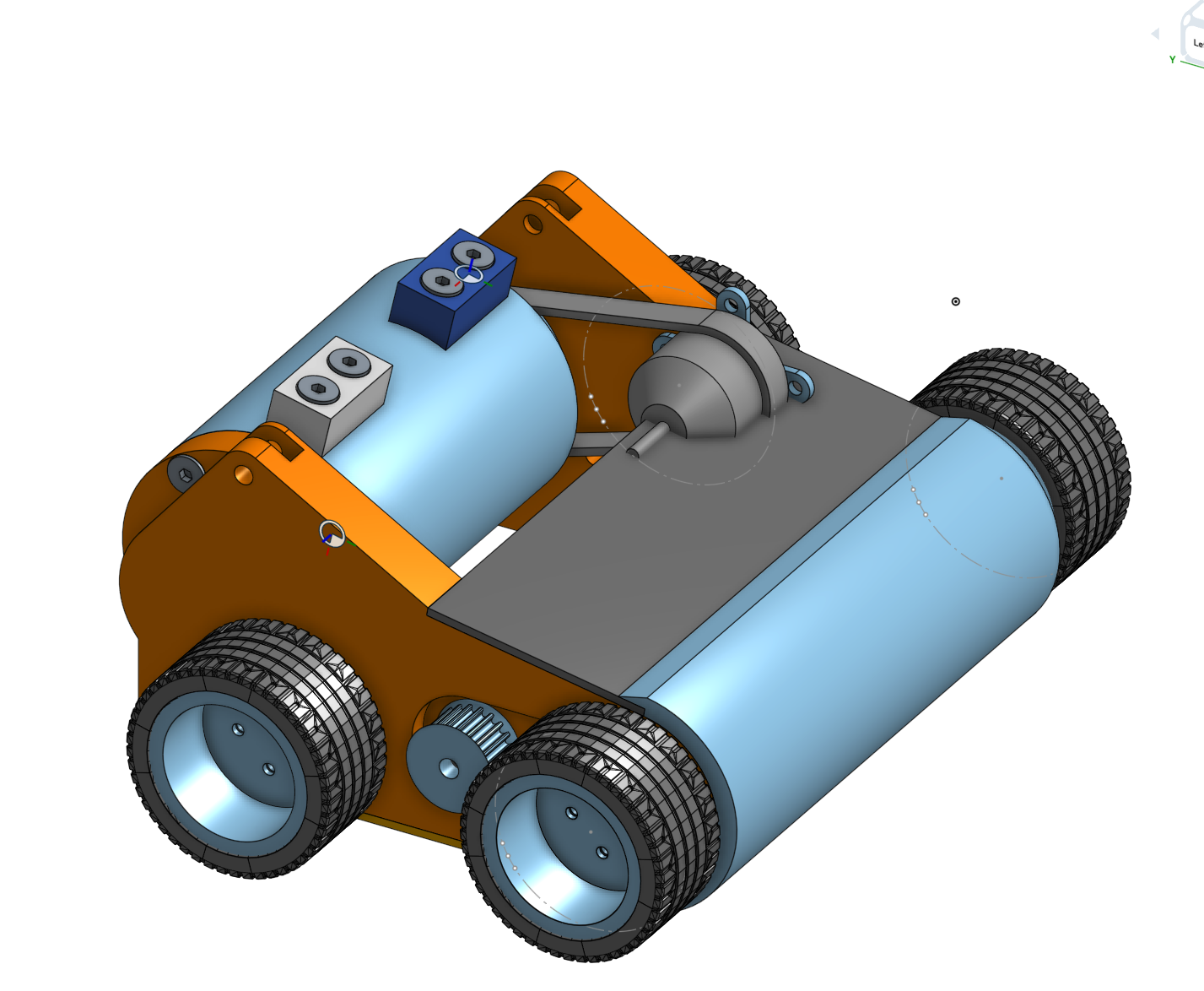
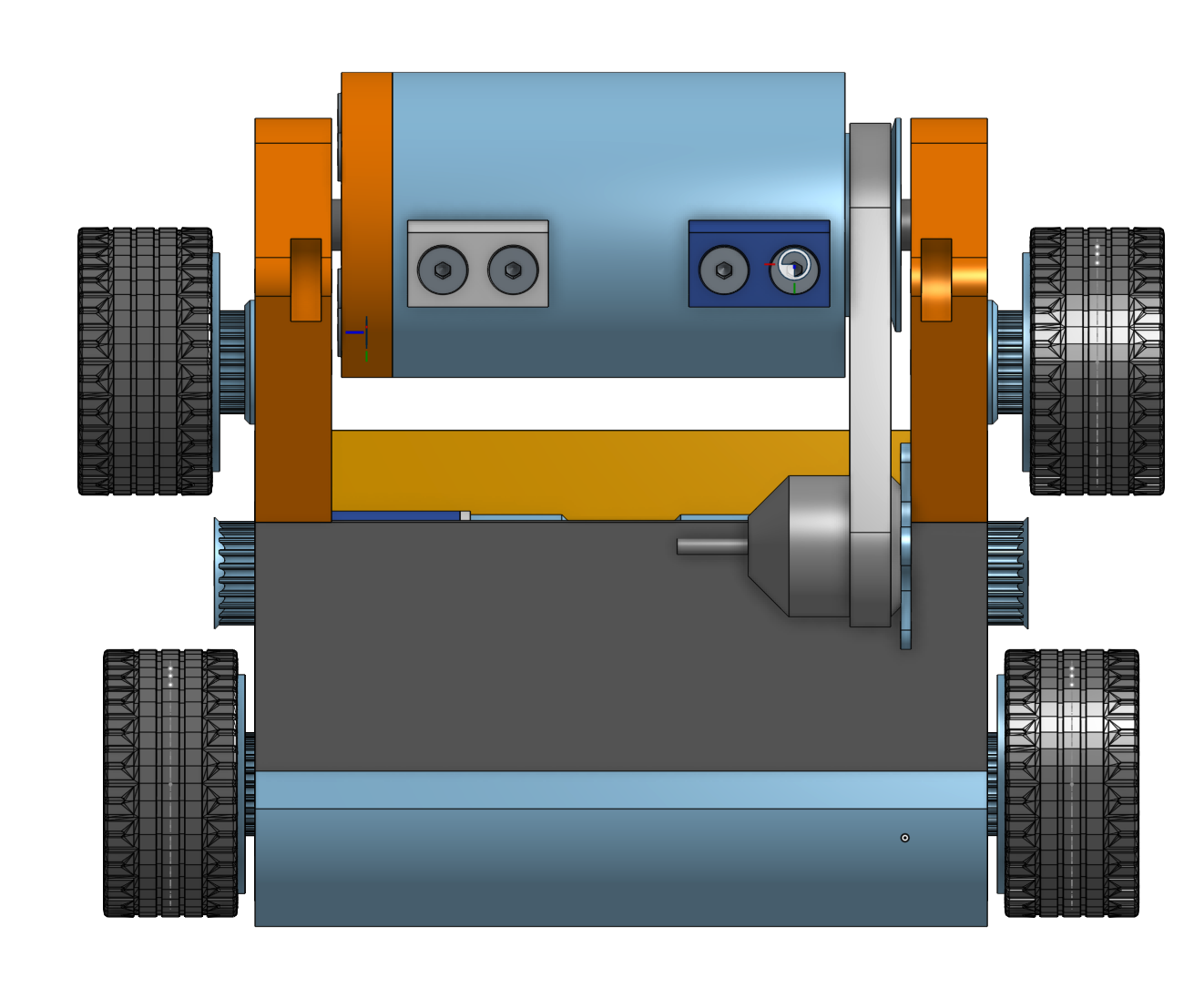
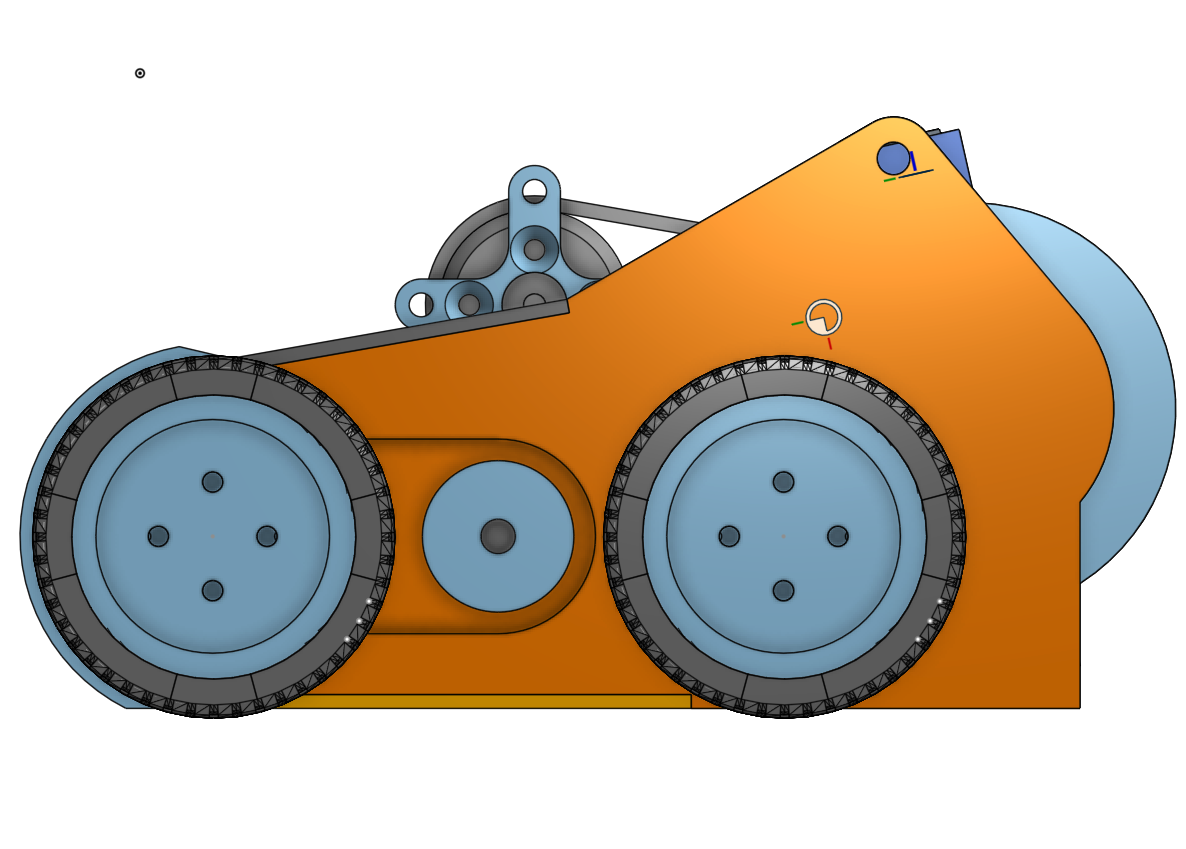
Combat strategy
MK2 traded MK1’s “feed-with-wedge” approach for direct horizontal drum engagement across the full front. There’s no separate wedge — the drum is the front face, spinning at high tip speed. The robot is harder to flank because both sides drive symmetrically, and the planetary gearboxes give meaningfully more pushing torque than MK1’s brushed gearmotors.
Replaceable teeth let MK2 stay competitive across a multi-match event without rebuilding the weapon: damaged teeth swap out in the pit instead of forcing a full drum reprint or remachine.
Weapon
Full-width machined aluminium drum with three replaceable teeth, belt-driven from one end
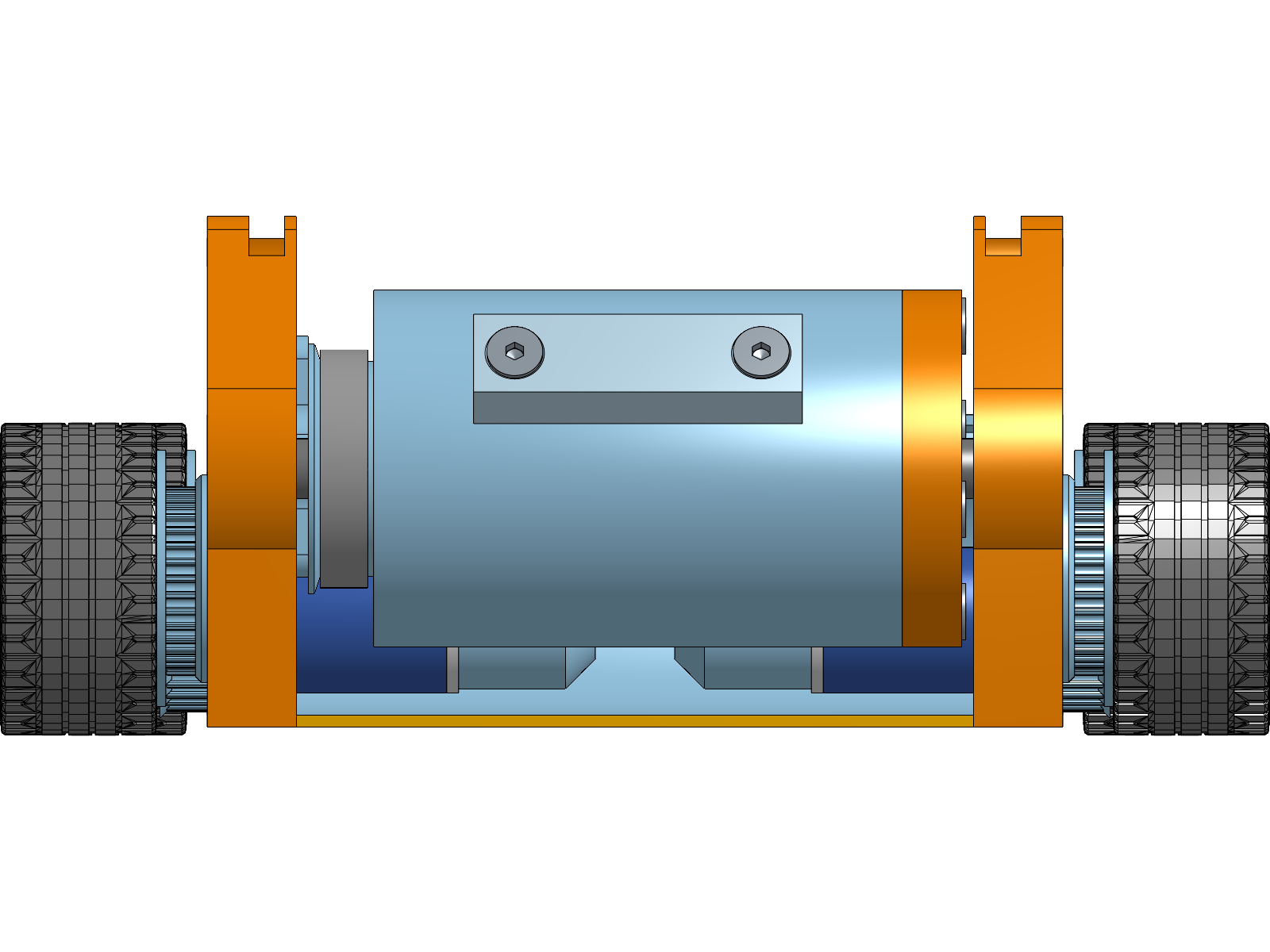
A front-mounted horizontal drum in machined aluminium, spanning the full front between two TPU side towers.
Drum
- OD 60 mm, length ~130 mm (Weapon part studio, Extrude 8)
- Runs on 2× MR688 sealed deep-groove bearings (8 × 16 × 5 mm) seated in the towers, on an 8 mm shaft
- 3 replaceable teeth in a circular pattern, each held by an M5 × 40 mm countersunk hex screw
Drive
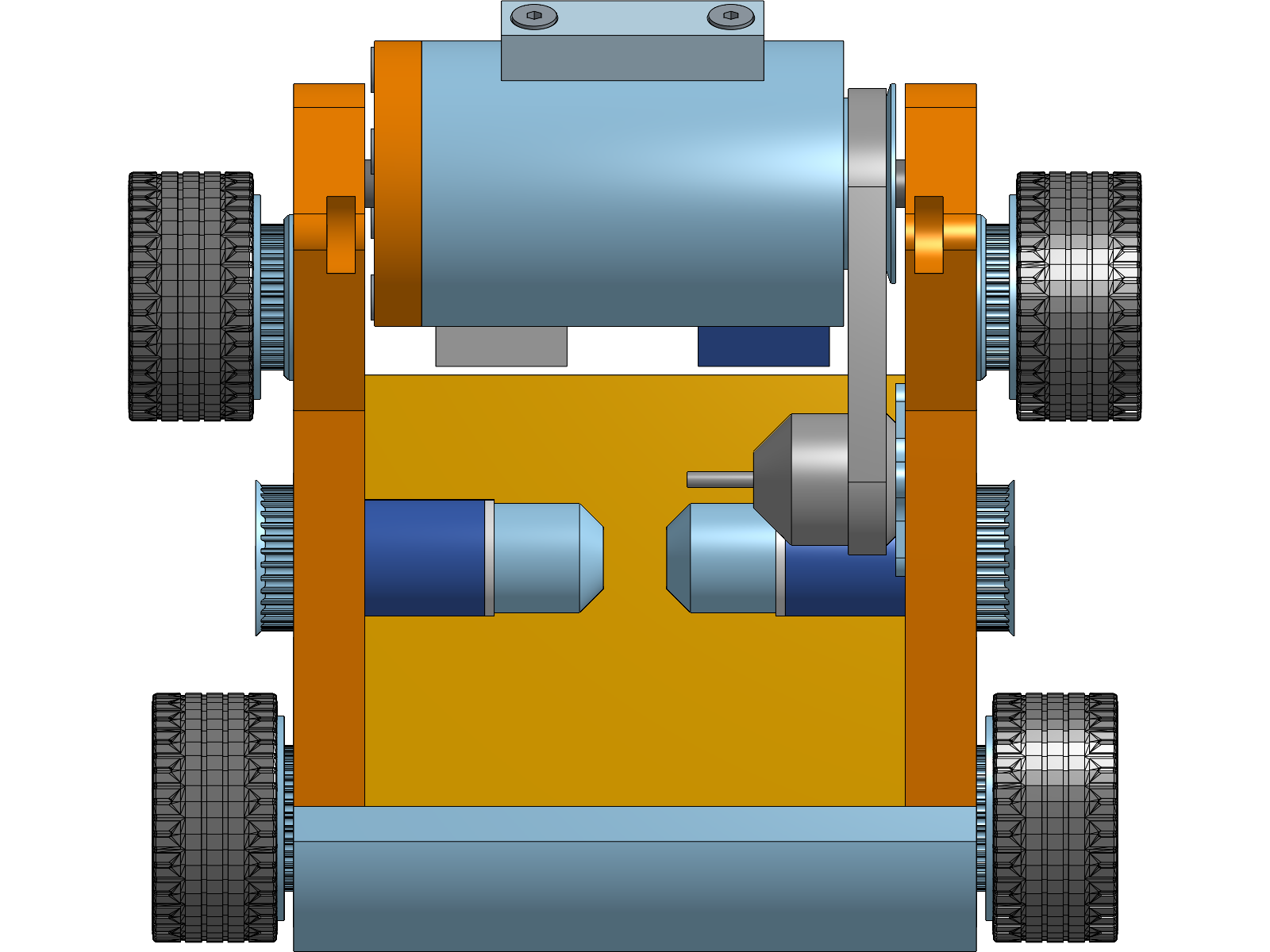
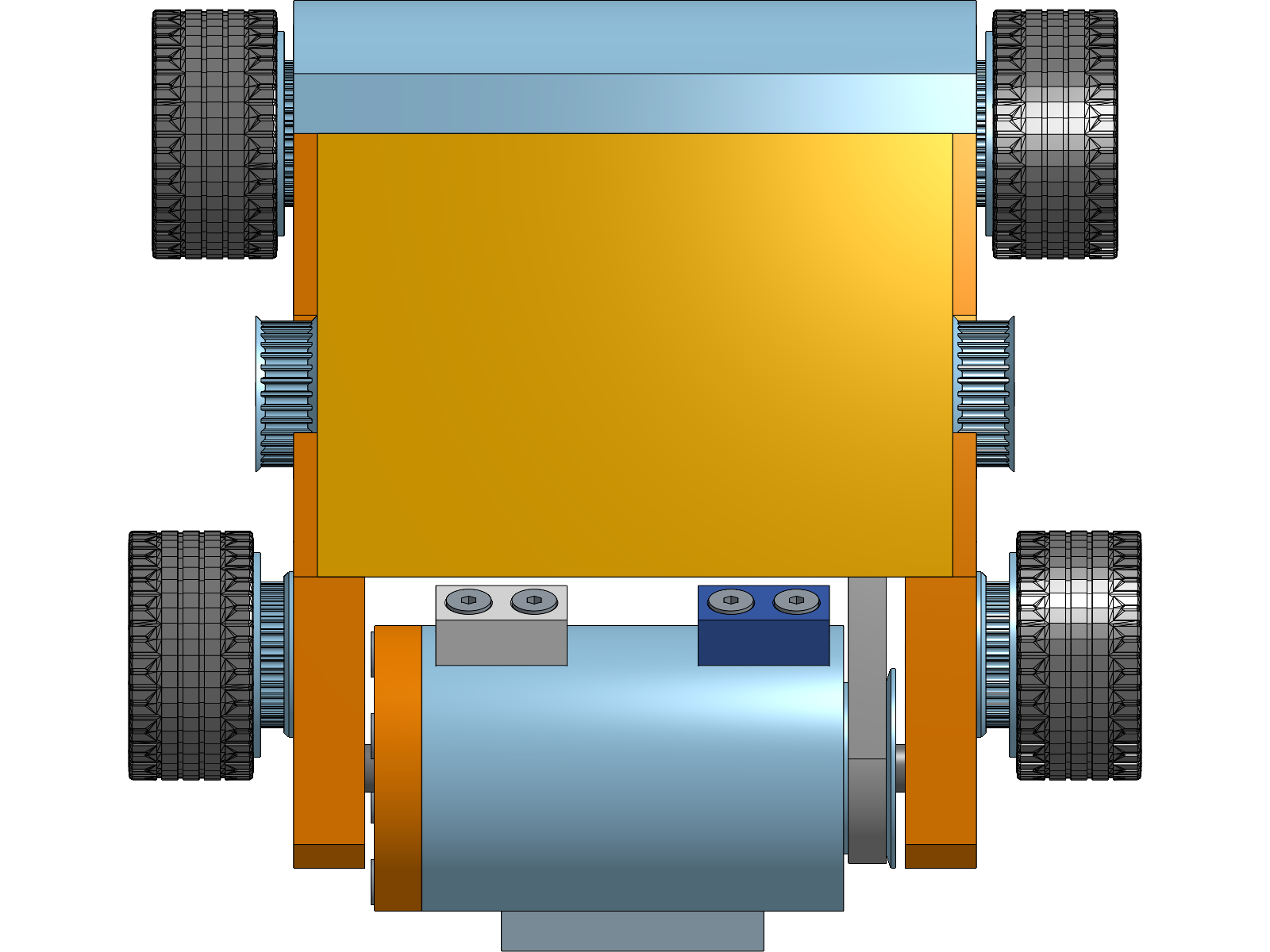
- Motor: brushless D2830 1000 kv, mounted on the right upright — not perched on the top plate as the earliest concept render suggested
- Belt: single belt, measured length 225.366 mm (Onshape variable
#weapBelt), from the motor down to a pulley on the outboard end of the drum shaft - The drum is driven from one end only — the far bearing is support
Drive & Wheels
Brushless 4WD — one geared motor per side belting both wheels at 1:1
Drive
Four-wheel drive. 2× 2322 brushless motors with 25:1 planetary gearboxes, one per side, sit between the front and rear wheels along the chassis side. Each drives both wheels on its side through two equal belts at 1:1 — both wheels on a side spin in lockstep at the gearbox output speed.
Per side: 2322 brushless → 25:1 planetary → 33T sprocket (5 mm bore) → 4 mm belt → 33T sprocket (5.3 mm bore) → wheel axle.
- Wheel pulleys: 42 mm pitch diameter (chassis
Drivesketch)
Wheels
56×28 RZ knobby tyres on hubs (the 56x28rz assembly instance, ×4).
The drivetrain proved out and carried straight over to CICD.
Chassis & Electronics
TPU shell and side towers carrying the drum; ELRS control carried over from MK1
Chassis
MK2 carries the orange/red TPU outer shell language from MK1 but widens it for four wheels and a full-width front drum. Two TPU side towers (uprights) carry the drum bearings; the weapon motor is tied into the right tower.
Electronics and control
- Battery: 3S LiPo (capacity not chosen before the drum was scrapped)
- Control: carried over from MK1 — RadioMaster ER6 on ExpressLRS 2.4 GHz, EdgeTX radio
CAD
Onshape document, axis convention and multi-view renders
Document: Lucille MK2 on Onshape
Renders
Onshape’s Front view looks at the BACK of the robot — the CAD +Y axis points away from the drum, but in combat the drum side is the front (the business end that engages the opponent). The view filenames use Onshape’s axis labels (assembly-front-cad.png = Onshape Front = robot rear). Mentally flip when reading.
| CAD view | Filename | What’s in frame (robot-relative) |
|---|---|---|
| Isometric | assembly-isometric.png | Hero shot — drum across the combat front, weapon motor on the robot’s right upright |
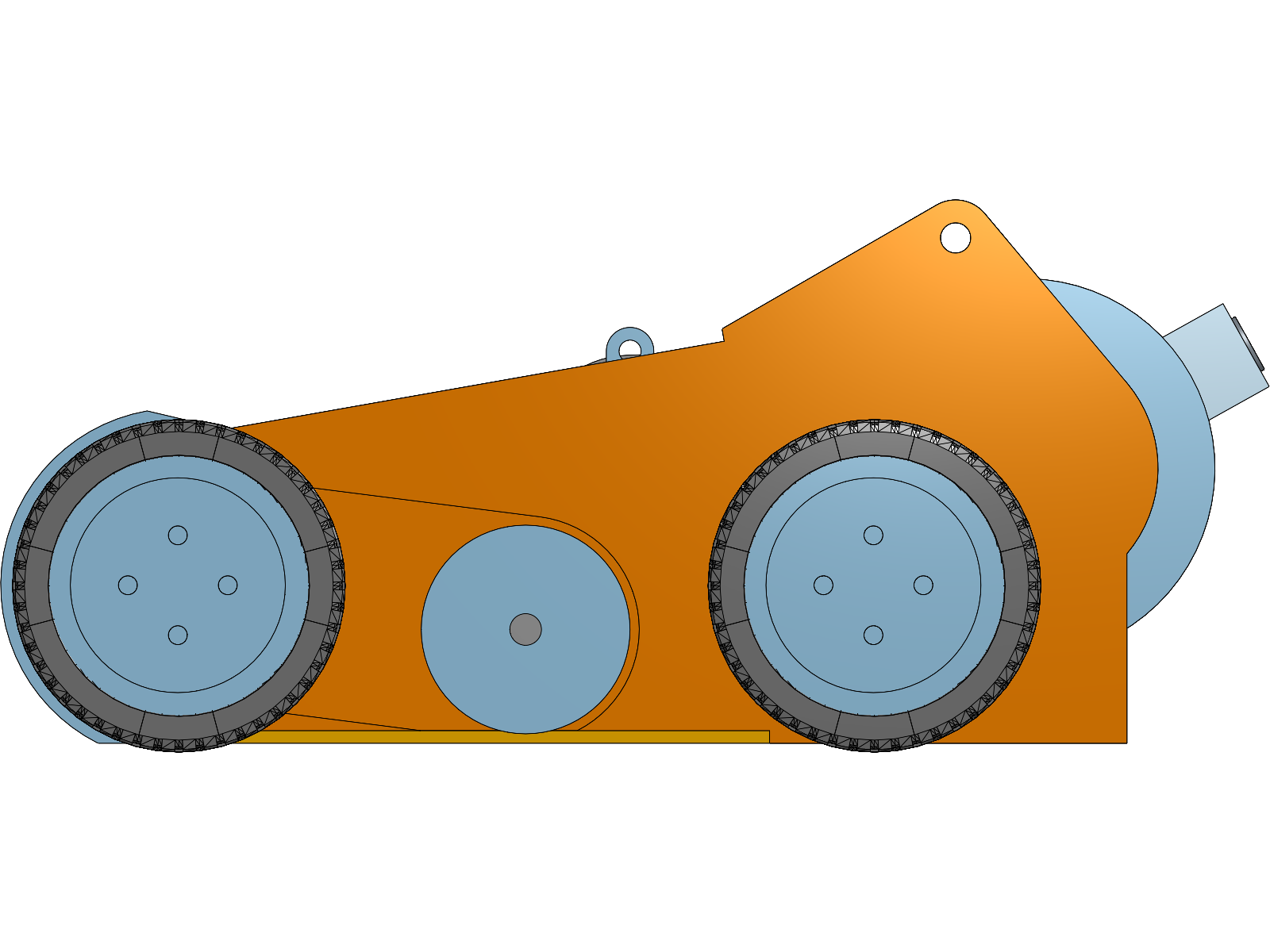
| Top | assembly-top.png | Looking down — weapon motor + bracket toward the bottom of the image is the robot front; drive pulleys visible at the chassis sides |
| Bottom | assembly-bottom.png | Underside — chassis floor + four wheel positions; weapon motor pokes through at the top of frame (robot front) |
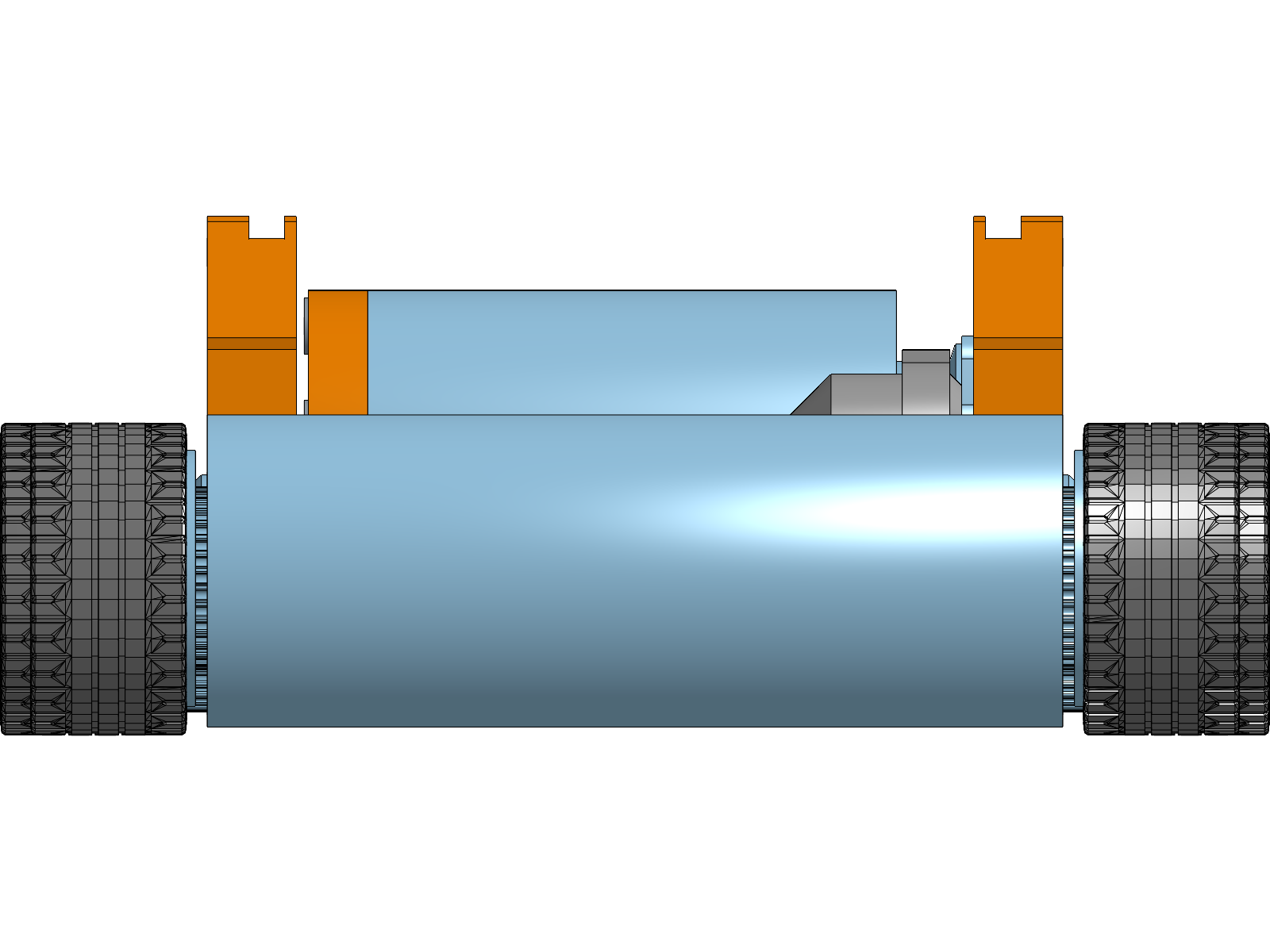
| Front (CAD) | assembly-front-cad.png | Looking at the robot’s REAR. Bottom cylinder = back bumper; orange uprights flank a flat top plate. |
| Back (CAD) | assembly-back-cad.png | Looking at the robot’s FRONT (drum-first). Big cylinder at top-center is the drum viewed end-on; bracket above it bolts the upright into the top plate. |
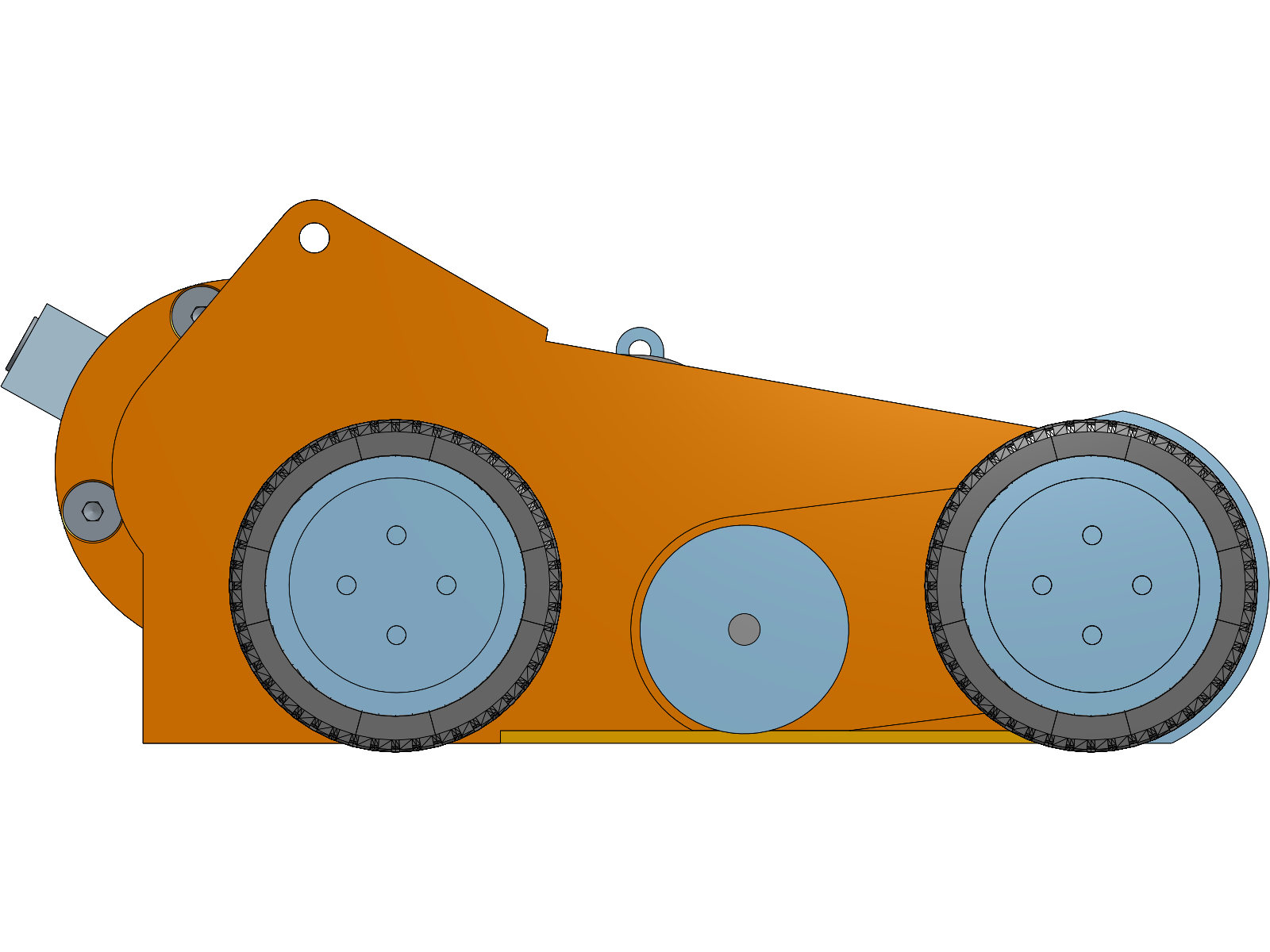
| Right (CAD) | assembly-right-cad.png | Looking at the robot’s LEFT side. Front + rear wheel with central drive pulley; small shaft stub at upper-right (combat-front side, no motor on this side). |
| Left (CAD) | assembly-left-cad.png | Looking at the robot’s RIGHT side. Same wheel layout; cylindrical body poking out upper-left is the D2830 weapon motor mounted to this upright. |
| Trimetric | assembly-trimetric.png | Alternative iso angle for layout discussion |
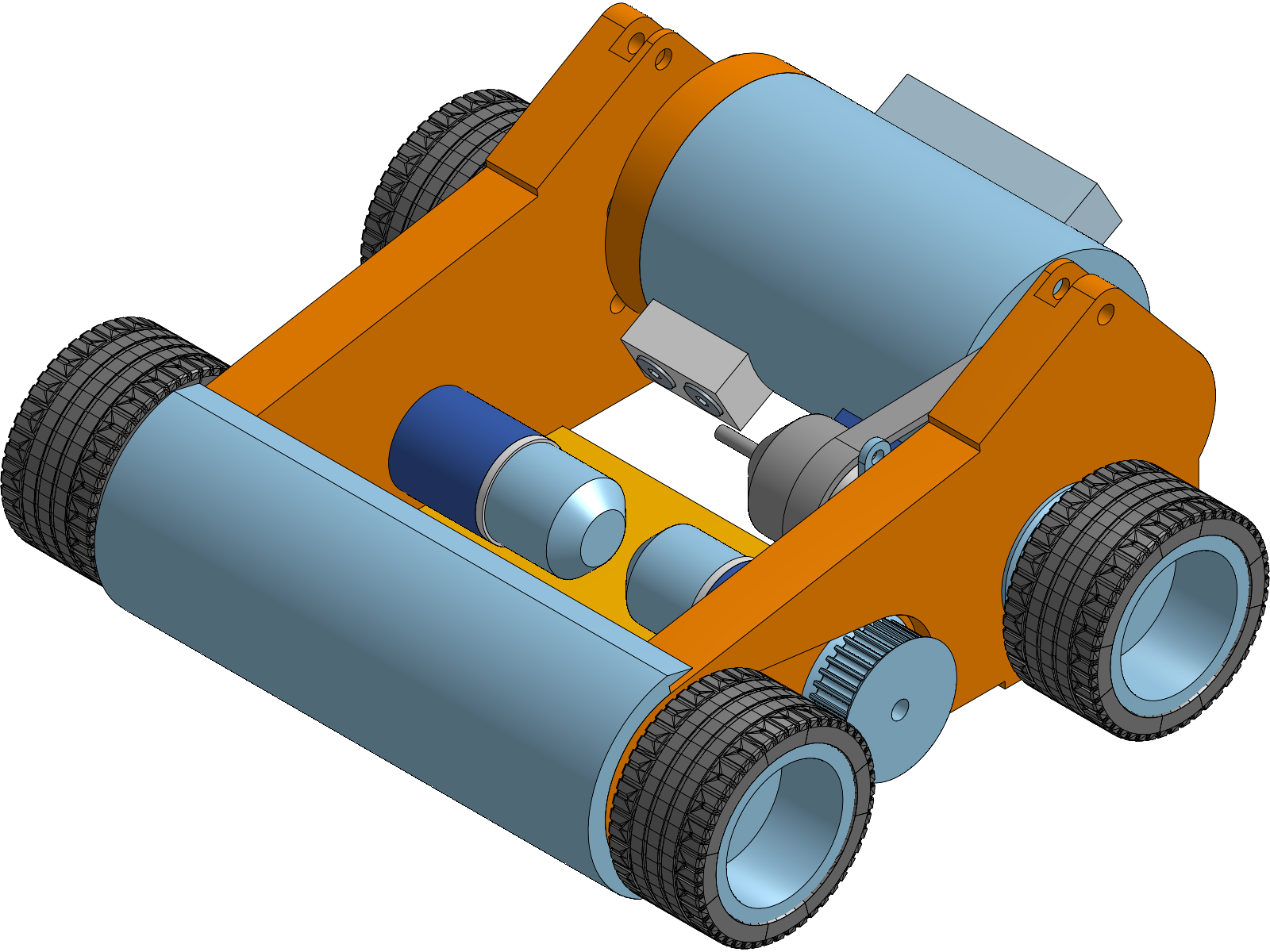
Design decisions
What we chose, what we rejected, and why.
Drum scrapped — too much mass for too little inertia
accepted The aluminium drum stored too little energy for its weight; the drivetrain moved on to C.I.C.D.
Drum scrapped — too much mass for too little inertia
acceptedDecision: scrap the MK2 drum. Successor: the vertical-spinner CICD.
The machined aluminium drum (OD 60 mm × ~130 mm) was heavy but had too little moment of inertia — it stored too little energy for its share of the 1500 g budget.
What carried over: the brushless 4WD drivetrain (2322 + 25:1 planetary) and the ELRS control stack, which had already proved reliable. C.I.C.D. stores far more energy in a lighter 8 mm Hardox blade.