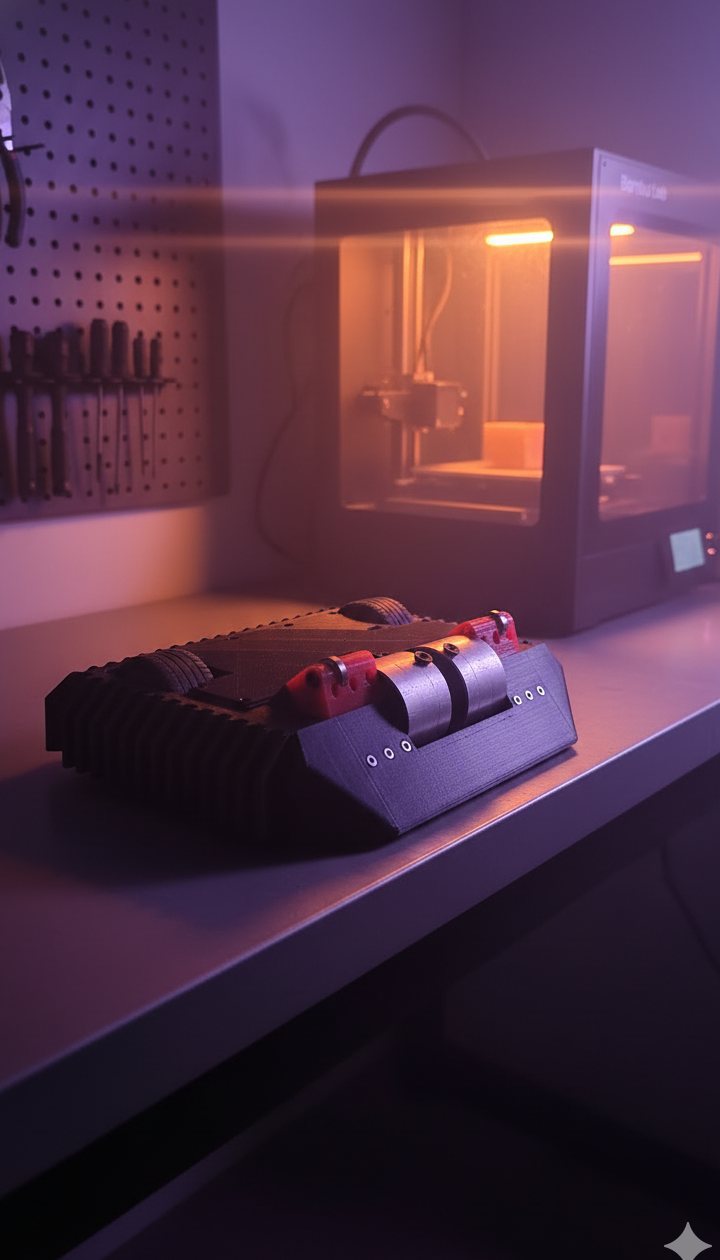
Overview
Lucille (MK1) was retired after IberAnime. The platform was superseded by Lucille MK2, which moved to a brushless drivetrain and a wider front-mounted horizontal drum with replaceable teeth. This page is preserved as historical reference for the original beetleweight build.
Lucille is a combat robot that prioritizes aggressive, intimidating aesthetics paired with a low-slung, durable chassis. Named after the infamous bat from The Walking Dead, its design language is centred around a “brute force” approach to kinetic energy. Final weight 1100 g in the 1500 g beetleweight class.
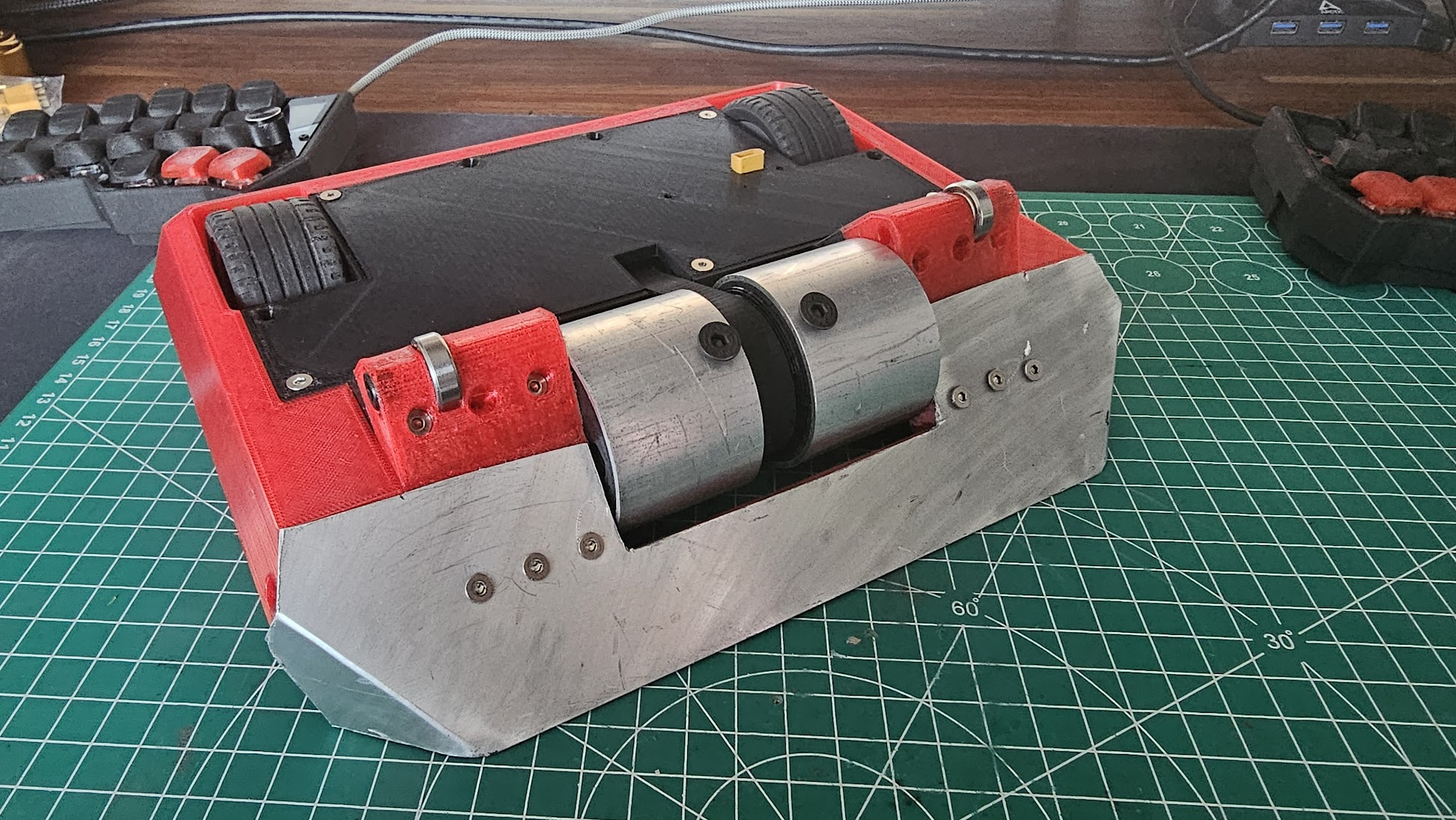
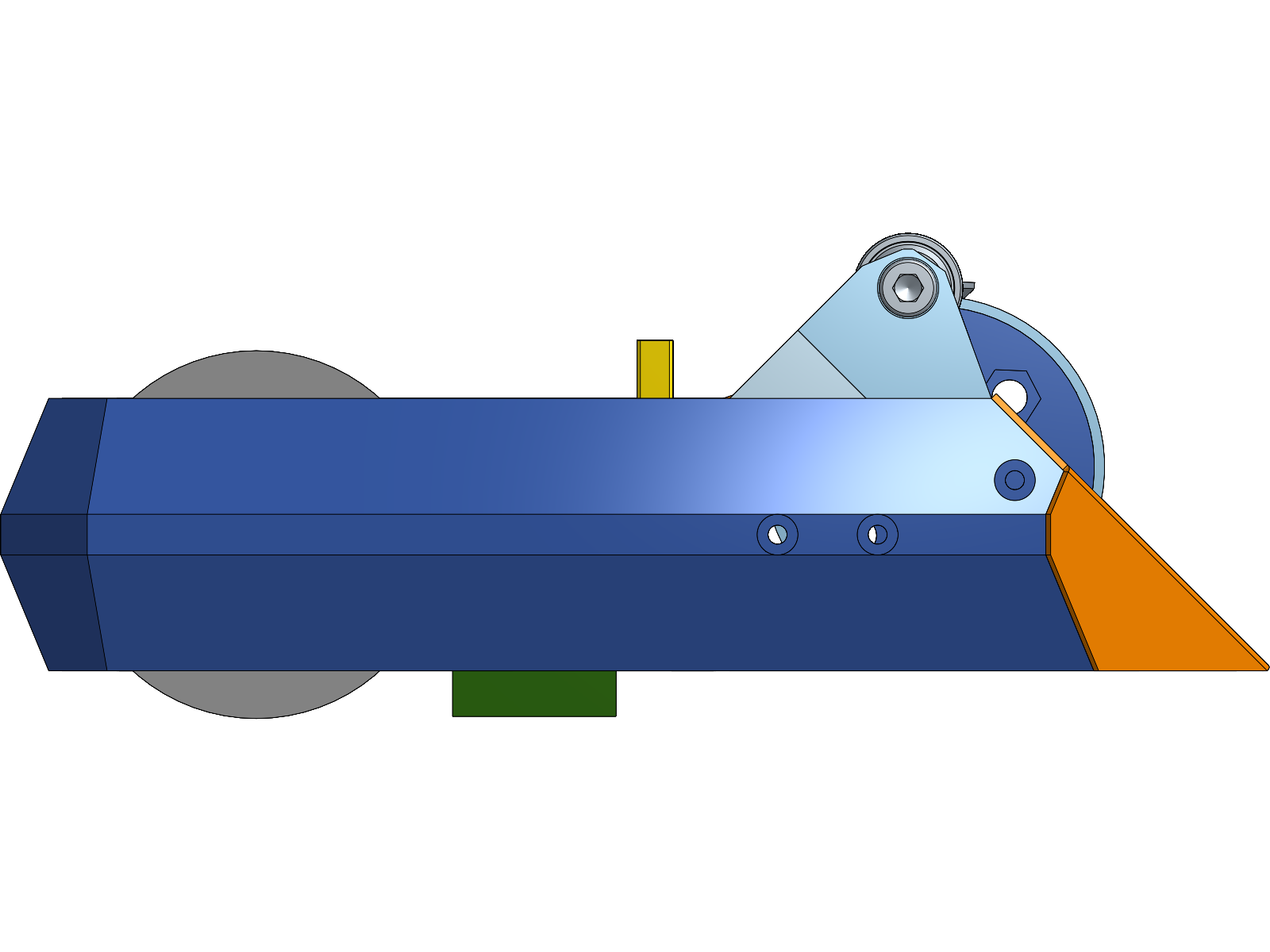
The robot is a low-profile wedge, intended to slide underneath opponents and feed them directly into its spinning drum. Photos: build & combat album on Google Photos.
Combat strategy
Lucille is designed to be a distractor and a destroyer. The 2mm steel wedge forces the opponent upward, where the screw-studded drum makes contact. Because the drum is solid PETG but weighted with steel screws and tie-rods, it carries significant rotational inertia — enough to flip or severely gouge opponents of the same weight class.
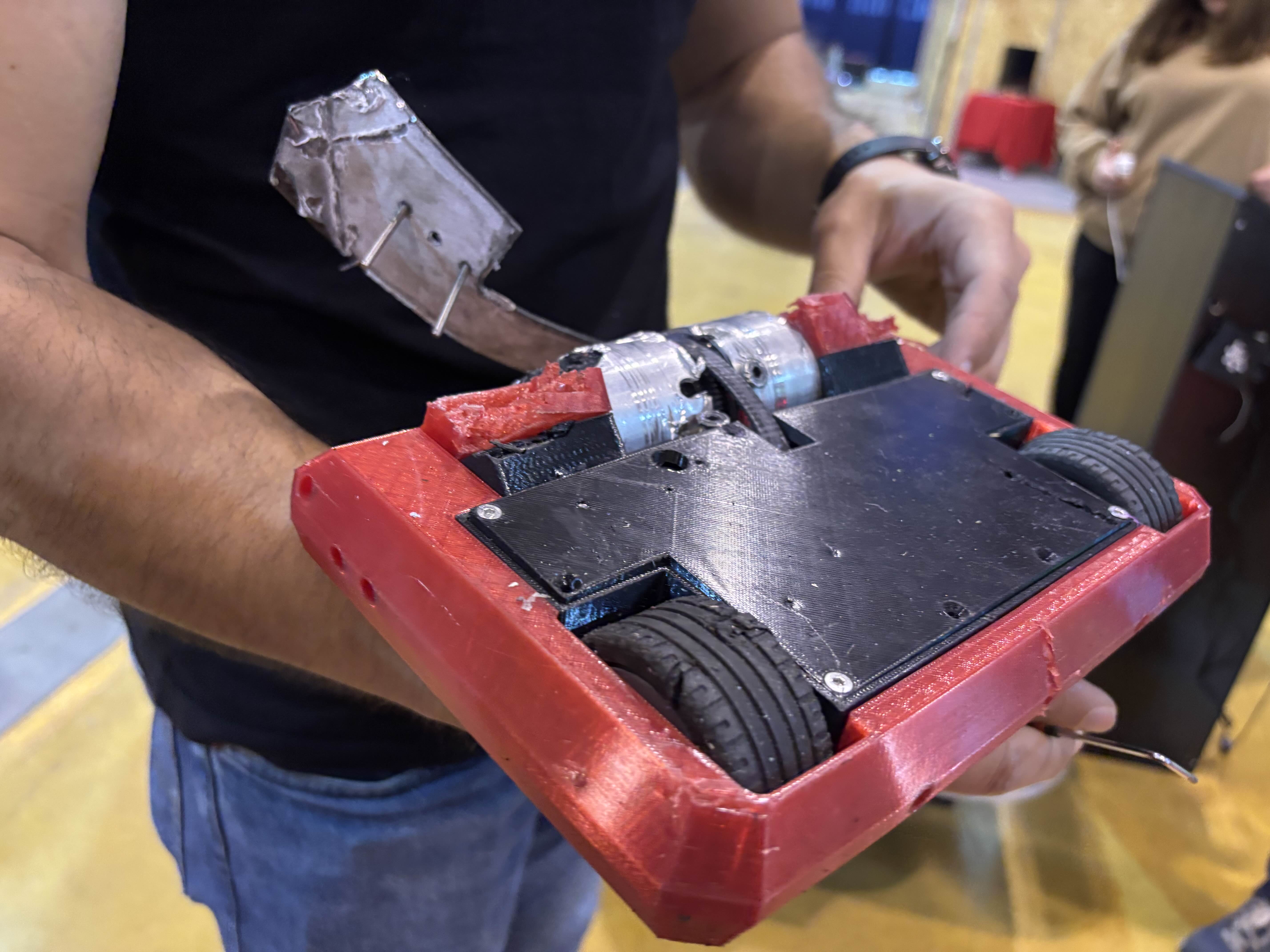
The TPU armor ensures that even if Lucille takes a hit, the internal electronics remain isolated from the vibration and shock of the impact.
Weapon
310 g split drum — aluminium sleeves around a central GT2 belt drive, RS2205 at ~25,000 RPM
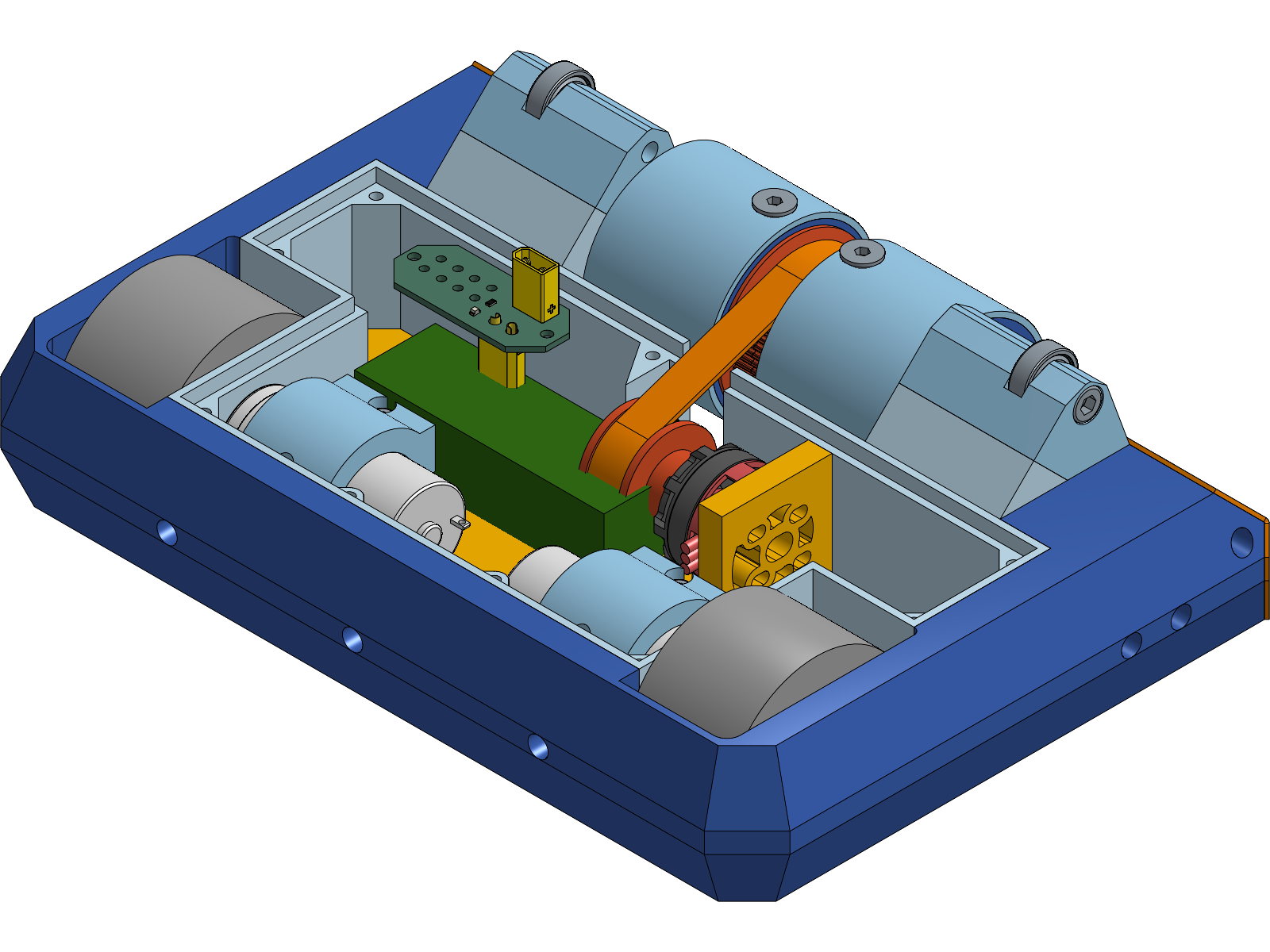
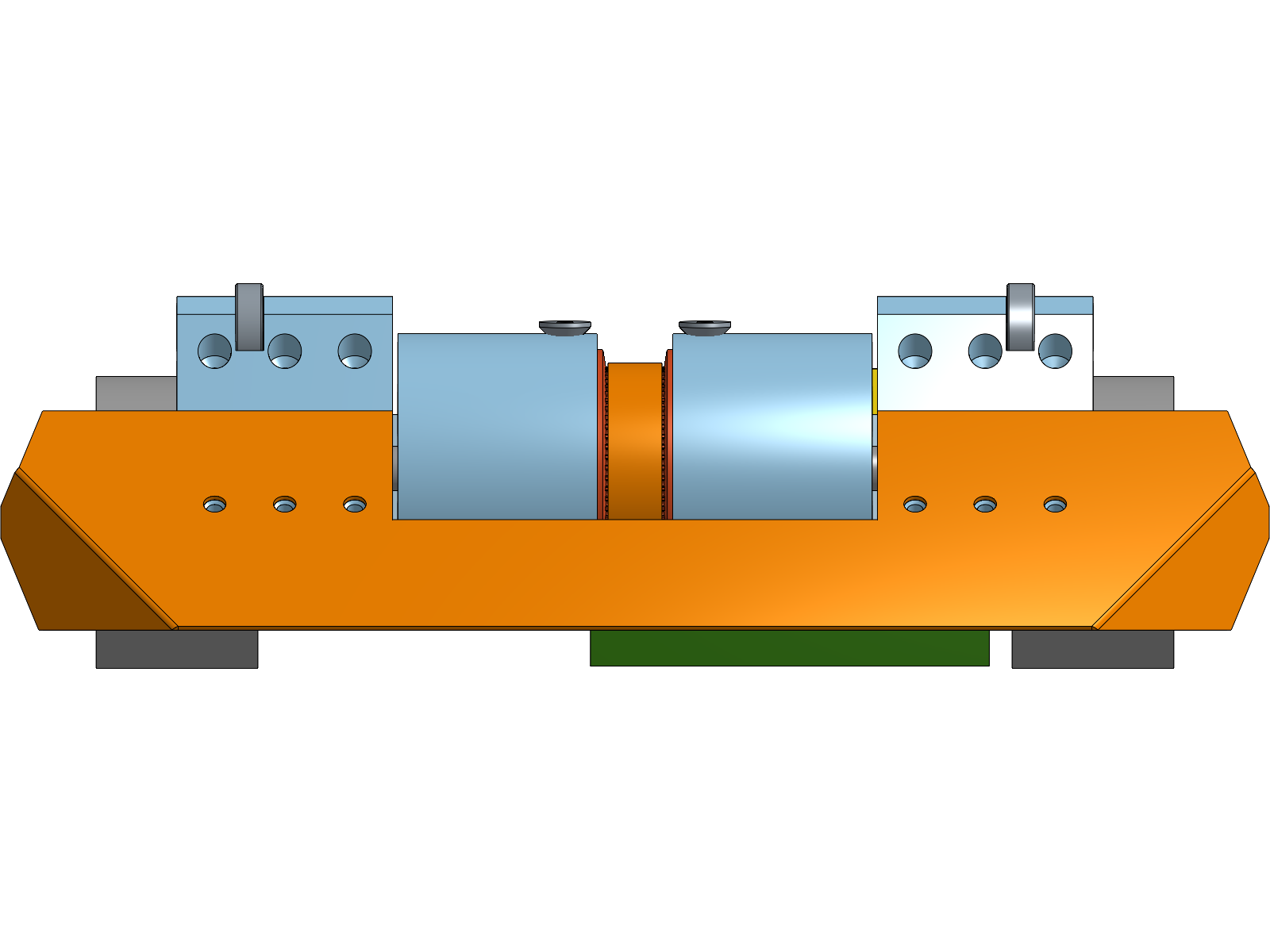
The centrepiece is a redesigned 310 g split drum: two 1.5 mm machined aluminium sleeves flanking a central GT2 belt drive.
To maximise “bite” on impact, the drum uses an asymmetric screw layout: 4× M5 screws in two pairs 180° apart — one pair close together, the other spread wide across the drum’s width.
Drive
- Motor: RS2205 2300 kv, roughly 25,000 RPM unloaded on 3S
- Belt: central GT2 200-2M-10, 30T → 40T
- The central belt reduces the risk of slippage compared with side-mounted drives
Drive & Wheels
400 RPM brushed gearmotors on Lego 56×28 ZR tyres
Lucille moves on Lego 56×28 ZR tyres, which balance grip and impact resistance. They’re driven by 25GA-370 400 RPM geared motors, giving a controlled but authoritative presence on the arena floor.
Chassis & Electronics
Thick TPU shell over a PETG inner structure, 45° steel wedge, ELRS control
Chassis and armour
- Shell: 3D-printed TPU, 10–30 mm thick. It acts as a shock absorber — thick and “rubbery”, bouncing back from high-energy impacts rather than shattering like rigid plastics.
- Inner structure: PETG, for rigidity where it’s needed.
- Wedge: a 45° 2 mm steel feeder wedge at the front — a hard edge to win the ground game and get under an opponent’s armour.
Electronics and control
- Battery: 3S 850 mAh 70C CNHL MiniStar
- Control: ExpressLRS via a RadioMaster ER6 — ultra-low latency, so driver inputs are near-instantaneous, which matters for lining up a drum shot. Receiver PWM drives the weapon and drive ESCs directly.
Competition log
-
IberAnime
No podium — last event before retirementevent2026-05-15 location_onPortugalLucille’s last event — the MK1 line was retired after IberAnime (drum judged inefficient; succeeded by Lucille MK2).
What worked
- No electrical issues — the power/electronics held up all weekend (contrast with Oeiras, where the plug and power-board fasteners came loose).
- 4S is the way to go — 4S gave the right balance of drive speed and weapon speed; confirmed as the voltage to build around.
Lessons
- Learn to tap out. Getting wrecked in the first day is no good — call the tap earlier to preserve the bot for later matches instead of taking avoidable damage.
-
Oeiras Gaming 2026
No podiumevent2026-05-09 location_onOeiras, PortugalLucille competed at Oeiras Gaming 2026. See the event prep checklist for the pre-event setup.
What went wrong
- Power plug comes loose — the main power connector worked its way loose during fights, killing the bot.
- Wheels lack grip — insufficient traction hurt drive control and pushing power.
- Power-board screw/nut comes loose on power-down — the fastener holding the power board backs off during the shutdown cycle.